As parents, we understand that learning a new skill takes time. We sign our kids up for piano lessons, dance classes, baseball practice, art classes, and countless other activities because we know that practice helps them improve. The more they practice, the more comfortable they become, and the more confident they feel.
Math is no different!
Math is a skill, and like any other skill, it takes practice to build understanding, fluency, and confidence. Yet, when a child struggles with math, it's easy to feel frustrated or struggle with how to help.
The good news? Sometimes, the answer is simply more opportunities to practice.
The Basics Matter More Than You Think
Here's the thing: math builds on itself. The foundational skills students learn in elementary school continue to show up as they progress through middle school, high school, and beyond.
Number sense develops over time. Adding and subtracting integers requires an understanding of positive and negative numbers. Working with fractions requires a solid understanding of division and equivalent values. Solving equations becomes much easier when basic operations feel familiar.
These foundational skills don't disappear when students move on to new concepts. They become the building blocks for everything that comes next.
When students have a stronger foundation, they can spend less time struggling with basic calculations and more time focusing on understanding new concepts and solving problems.
And that can make a big difference in how they feel about math.
Every Child Needs a Different Amount of Practice
One of the most important things I've learned as a middle school math teacher is that every student is different.
Some students catch on quickly and need only a little review. Others need to see a concept explained in multiple ways and practice it many more times before it clicks. Neither situation means a child isn't capable of learning math.
It simply means they are learning at their own pace.
As a middle school math teacher, I know firsthand that classroom time is limited. We have new standards to teach, concepts to explore, and skills to develop. As much as teachers would love to spend extra time practicing every foundational skill with every student, there often just aren't enough hours in the school day.
That's one reason short, consistent practice at home can be so helpful.
You don't need to spend hours working through worksheets or turn every evening into a math lesson. Even practicing for a few minutes several days a week can give your child valuable opportunities to strengthen skills, recognize patterns, and become more comfortable with math.
The goal isn't perfection. It's progress.
My Favorite Way to Practice Math Skills
Over the years, I've found one activity that I keep coming back to: pyramid practice!
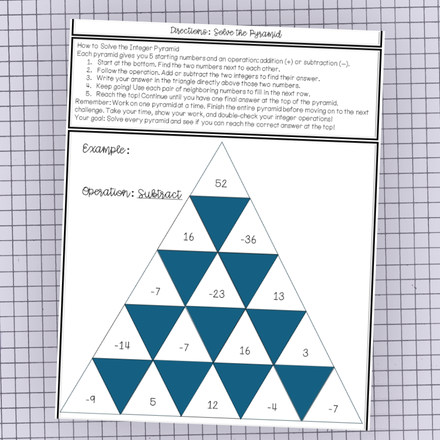
Solve the Pyramid Example
I've used math pyramids for many years, and they are one of my favorite activities to incorporate into tutoring sessions.
Here's why I love them.
Pyramid puzzles give students a clear goal to work toward. They practice a specific skill while working through a puzzle, which makes the activity feel more like a challenge than a traditional worksheet.
As a tutor, I can choose the skills my students need to review and give them targeted practice. If a student is struggling with adding and subtracting integers, for example, we can work through puzzles focused on those operations. As their skills improve, we can increase the challenge.
And once a student becomes comfortable with a topic? Sometimes we turn it into a friendly competition!
Who can solve the pyramid correctly the fastest?
That little bit of friendly competition can make practice more engaging while giving students a chance to recognize just how much they've improved.
Of course, speed isn't the only goal. Accuracy and understanding comes first. But when students become more confident with a skill, it's exciting to see them realize, "Hey, I can actually do this!"
Those moments matter.
How Parents Can Help Build Math Confidence at Home
You don't have to be a math teacher to help your child strengthen their math skills.
Here are a few simple ways to make math practice part of your routine:
1. Keep practice sessions short.
Start with 5–15 minutes a few days a week. Short, manageable sessions can feel much less overwhelming than a long homework session.
2. Focus on one skill at a time.
If your child is struggling with adding and subtracting integers, focus on that skill before moving on to something more complicated. Building a solid foundation can make future topics easier to understand.
3. Make practice feel achievable.
Choose activities that provide a clear goal and let your child see their progress. Puzzles, games, and challenges can help make practice feel less like extra schoolwork.
4. Celebrate improvement, not just correct answers.
Notice when your child needs fewer hints, makes fewer mistakes, or approaches a problem with more confidence. Those are signs of growth worth celebrating.
5. Be patient with the process.
Skills develop over time. If something doesn't click today, that doesn't mean your child can't learn it. Sometimes they just need another explanation, another example, or another opportunity to practice.
Most importantly, try to keep the experience positive. We want children to see math as something they can learn, not something they either can or cannot do.
A Simple Way to Get Started: My New Integer Practice Workbook
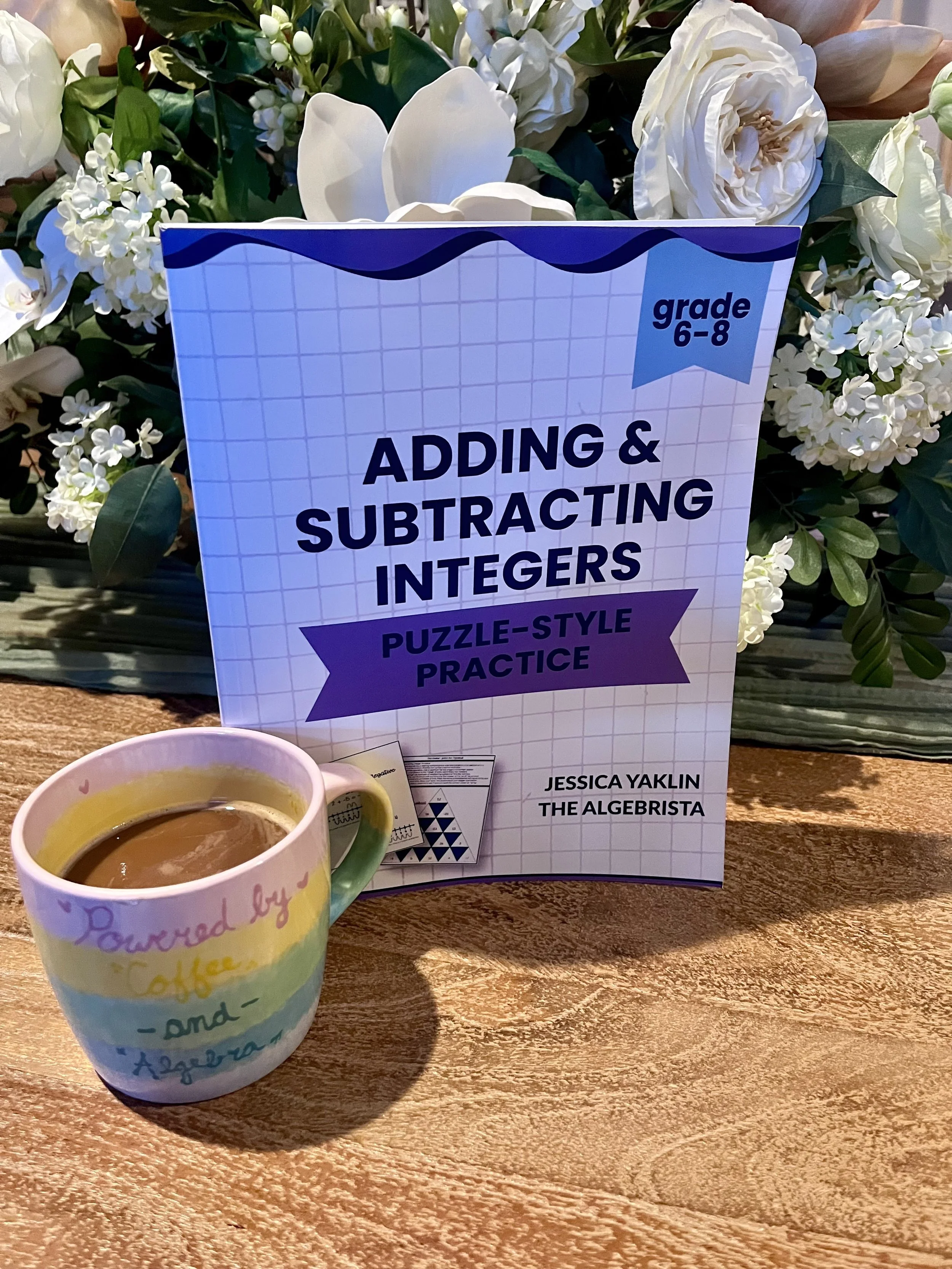
One reason I love pyramid practice so much is that it gives students a fun, structured way to work on important skills without requiring parents to plan an entire math lesson.
That's exactly why I created my new workbook, Adding and Subtracting Integers: Puzzle-Style Practice.
As a middle school math teacher and tutor, I wanted to create something that would help students beyond my own classroom. I know parents and homeschool families want to support their children's learning, but figuring out what to practice and finding the right materials can sometimes feel overwhelming.
This workbook makes getting started easier.
Inside, you'll find:
30 integer practice puzzles focused on adding and subtracting positive and negative numbers.
Helpful tips on every practice page to reinforce important skills.
Answer keys to make checking work easier.
Blank pyramids for creating additional challenges and practicing in new ways.
The puzzles are designed to give students meaningful practice while helping them build fluency and confidence with integer operations.
You can use them at home, during homeschool lessons, for extra review after school, or alongside tutoring sessions. Choose a few puzzles each week and let your child work at a comfortable pace.
You don't need a complicated plan. You just need a place to begin.
You can find my new integer practice workbook on Amazon: Adding and Subtracting Integers: Puzzle-Style Practice for Middle School Math
Small Steps Today, Stronger Math Skills Tomorrow
If there's one thing I want parents to take away from this post, it's this: your child doesn't have to master every math skill overnight.
Just like learning to play an instrument, dance, or play a sport, getting better at math takes time, repetition, and encouragement.
A little practice today can help a skill feel more familiar tomorrow. Over time, those small steps can add up to a stronger foundation and greater confidence.
Whether you practice with math games, puzzles, flashcards, or a few extra problems together at the kitchen table, what matters most is giving your child opportunities to keep learning.
And remember, struggling with a skill today doesn't determine what your child will be able to do tomorrow.
Sometimes, they just need a little more practice and someone who believes they can get there.
Here's to making math feel a little more approachable, one puzzle at a time!
— Jessica
Algebrista