Geometry Tools: Ruler, Protractor & Compass
$2.25
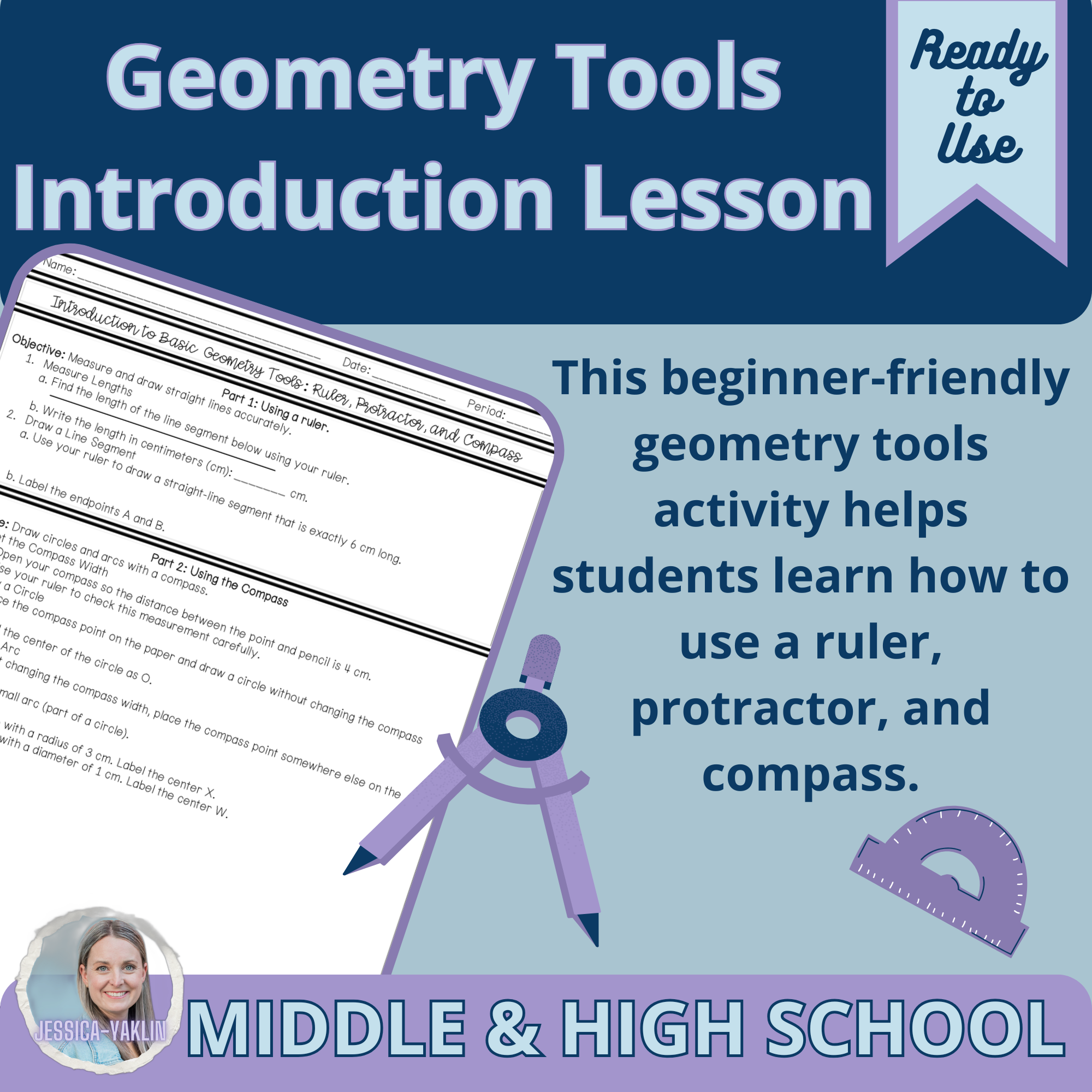
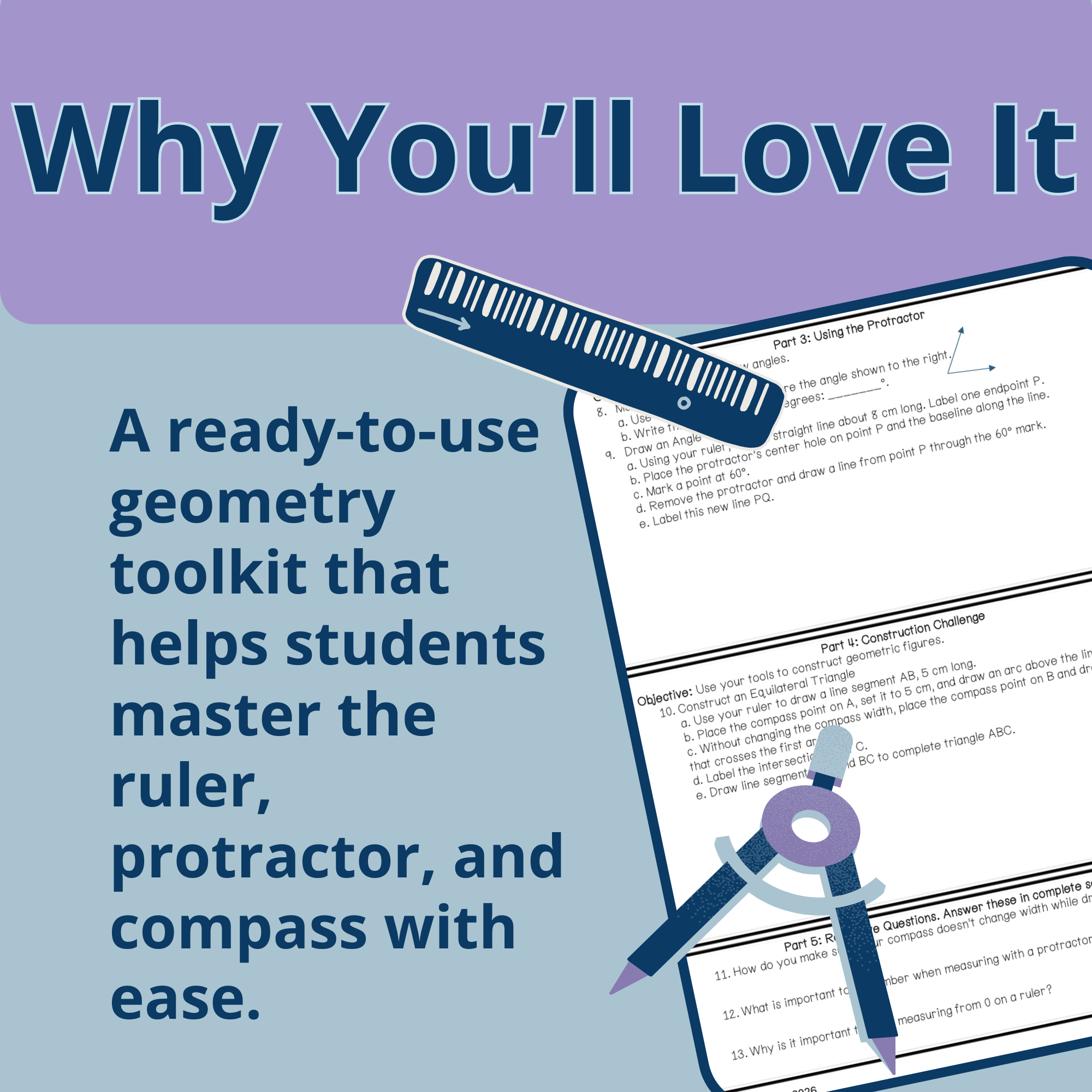
Build confidence with geometry and give students a strong foundation in using essential math tools with this Geometry Tools Practice Activity. This hands-on resource teaches students how to accurately use a ruler, protractor, and compass through clear directions, guided practice, and engaging geometric constructions. Whether you use it to introduce geometry tools, review measurement skills, or reinforce precision throughout your geometry unit, students will develop confidence while mastering the tools they'll use all year long.
Students measure and draw line segments, construct and measure angles, create circles and arcs with a compass, and complete a geometric construction challenge. As they progress through each activity, they build accuracy, mathematical reasoning, and confidence with every new skill.
This resource is flexible enough for a variety of classroom settings—use it as an introductory lesson, guided practice, math stations, independent work, or a beginning-of-year geometry review.
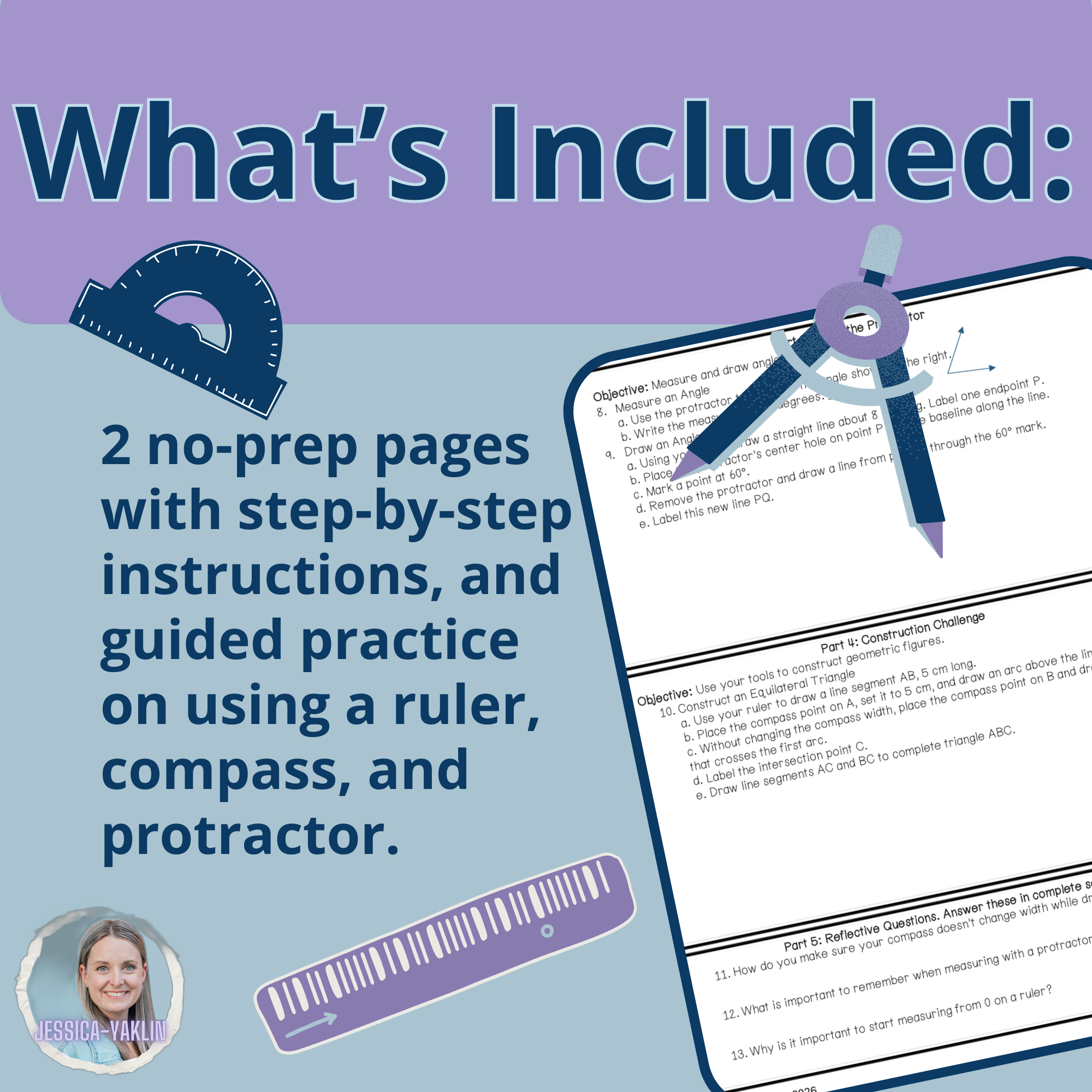
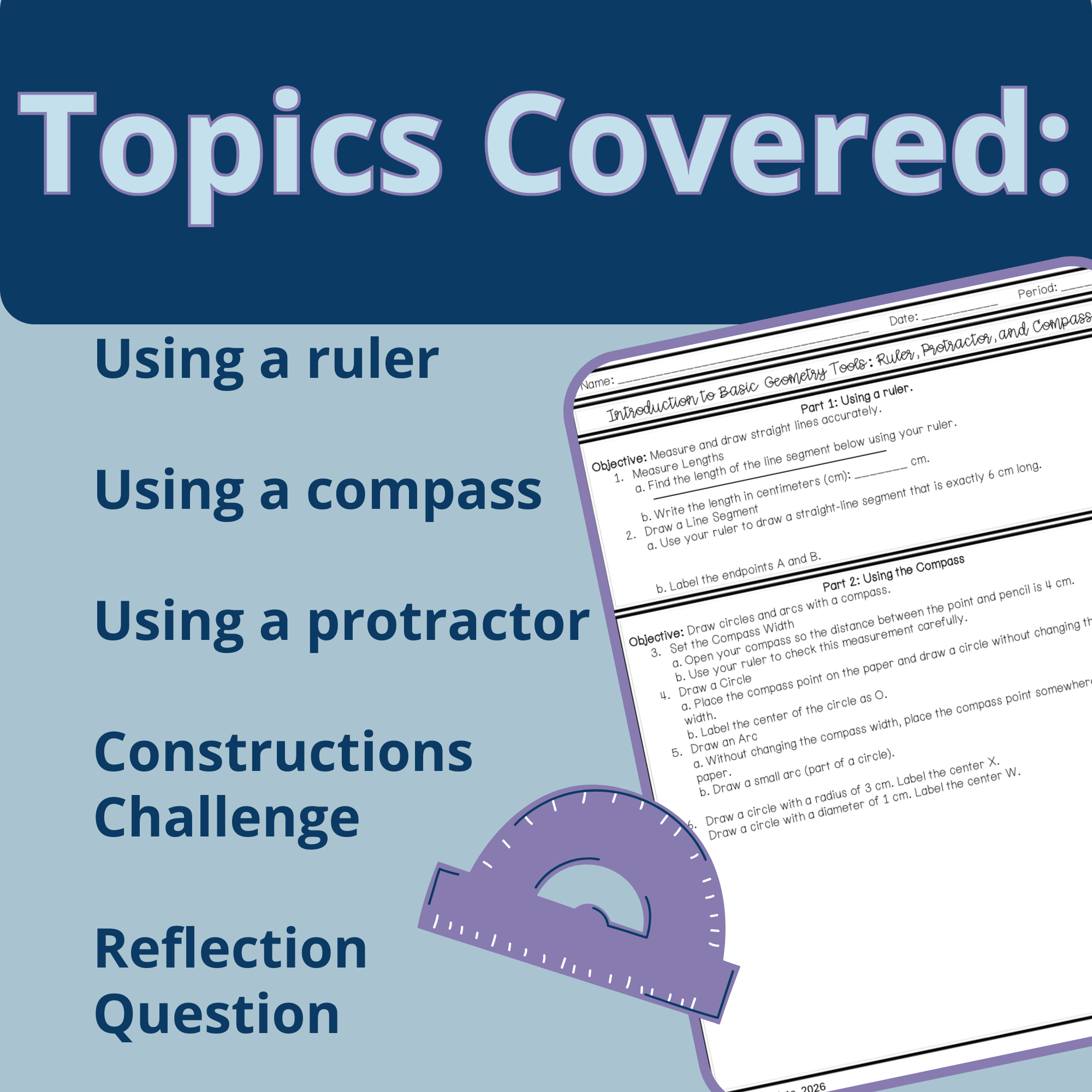
Guided practice measuring and drawing line segments with a ruler
Step-by-step practice measuring and constructing angles using a protractor
Compass activities for drawing circles and arcs
Geometric construction challenge: construct an equilateral triangle
Reflection questions to reinforce understanding of each geometry tool
Clear student-friendly directions for easy implementation
Students will:
Accurately measure and draw line segments using a ruler
Measure and construct angles with confidence using a protractor
Draw circles and arcs using a compass
Apply multiple geometry tools to complete a geometric construction
Strengthen precision, mathematical reasoning, and attention to detail
Build confidence using the tools required throughout middle school and high school geometry
Many students struggle with geometry because they have limited experience using the tools required to explore geometric concepts. This activity builds confidence by introducing one tool at a time through structured, guided practice before asking students to apply multiple skills together.
As students move from measuring to constructing, they develop both procedural fluency and conceptual understanding. The hands-on activities transform abstract geometry into meaningful learning experiences while reinforcing the importance of precision and mathematical accuracy.
The culminating equilateral triangle construction encourages students to synthesize everything they've learned, helping them retain these foundational skills for future geometry topics.
Beginning-of-unit geometry lesson
Introducing rulers, protractors, and compasses
Back-to-school geometry review
Guided math instruction
Independent practice
Math station
Small-group intervention
Geometry review before assessments
TEKS
MA.7.5.A: Investigate and apply geometric relationships using appropriate tools.
MA.7.5.C: Use geometric tools to construct figures and solve problems involving geometric relationships.
CCSS
CCSS.MATH.CONTENT.7.G.A.2: Draw geometric shapes with given conditions and solve problems involving scale drawings and constructions.
Build confidence with geometry and give students a strong foundation in using essential math tools with this Geometry Tools Practice Activity. This hands-on resource teaches students how to accurately use a ruler, protractor, and compass through clear directions, guided practice, and engaging geometric constructions. Whether you use it to introduce geometry tools, review measurement skills, or reinforce precision throughout your geometry unit, students will develop confidence while mastering the tools they'll use all year long.
Students measure and draw line segments, construct and measure angles, create circles and arcs with a compass, and complete a geometric construction challenge. As they progress through each activity, they build accuracy, mathematical reasoning, and confidence with every new skill.
This resource is flexible enough for a variety of classroom settings—use it as an introductory lesson, guided practice, math stations, independent work, or a beginning-of-year geometry review.
Guided practice measuring and drawing line segments with a ruler
Step-by-step practice measuring and constructing angles using a protractor
Compass activities for drawing circles and arcs
Geometric construction challenge: construct an equilateral triangle
Reflection questions to reinforce understanding of each geometry tool
Clear student-friendly directions for easy implementation
Students will:
Accurately measure and draw line segments using a ruler
Measure and construct angles with confidence using a protractor
Draw circles and arcs using a compass
Apply multiple geometry tools to complete a geometric construction
Strengthen precision, mathematical reasoning, and attention to detail
Build confidence using the tools required throughout middle school and high school geometry
Many students struggle with geometry because they have limited experience using the tools required to explore geometric concepts. This activity builds confidence by introducing one tool at a time through structured, guided practice before asking students to apply multiple skills together.
As students move from measuring to constructing, they develop both procedural fluency and conceptual understanding. The hands-on activities transform abstract geometry into meaningful learning experiences while reinforcing the importance of precision and mathematical accuracy.
The culminating equilateral triangle construction encourages students to synthesize everything they've learned, helping them retain these foundational skills for future geometry topics.
Beginning-of-unit geometry lesson
Introducing rulers, protractors, and compasses
Back-to-school geometry review
Guided math instruction
Independent practice
Math station
Small-group intervention
Geometry review before assessments
TEKS
MA.7.5.A: Investigate and apply geometric relationships using appropriate tools.
MA.7.5.C: Use geometric tools to construct figures and solve problems involving geometric relationships.
CCSS
CCSS.MATH.CONTENT.7.G.A.2: Draw geometric shapes with given conditions and solve problems involving scale drawings and constructions.