Transformations Project: Coordinate Plane Art
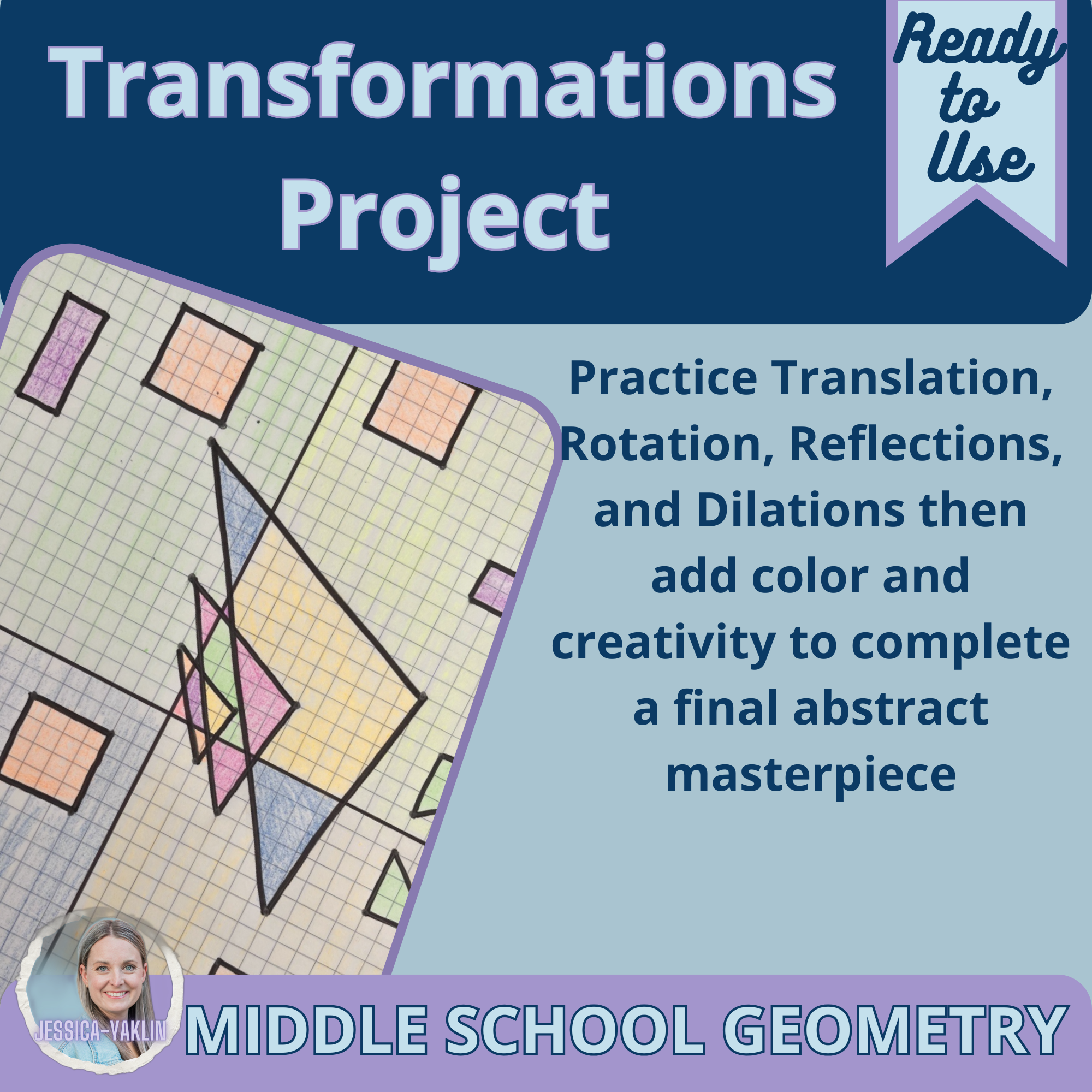
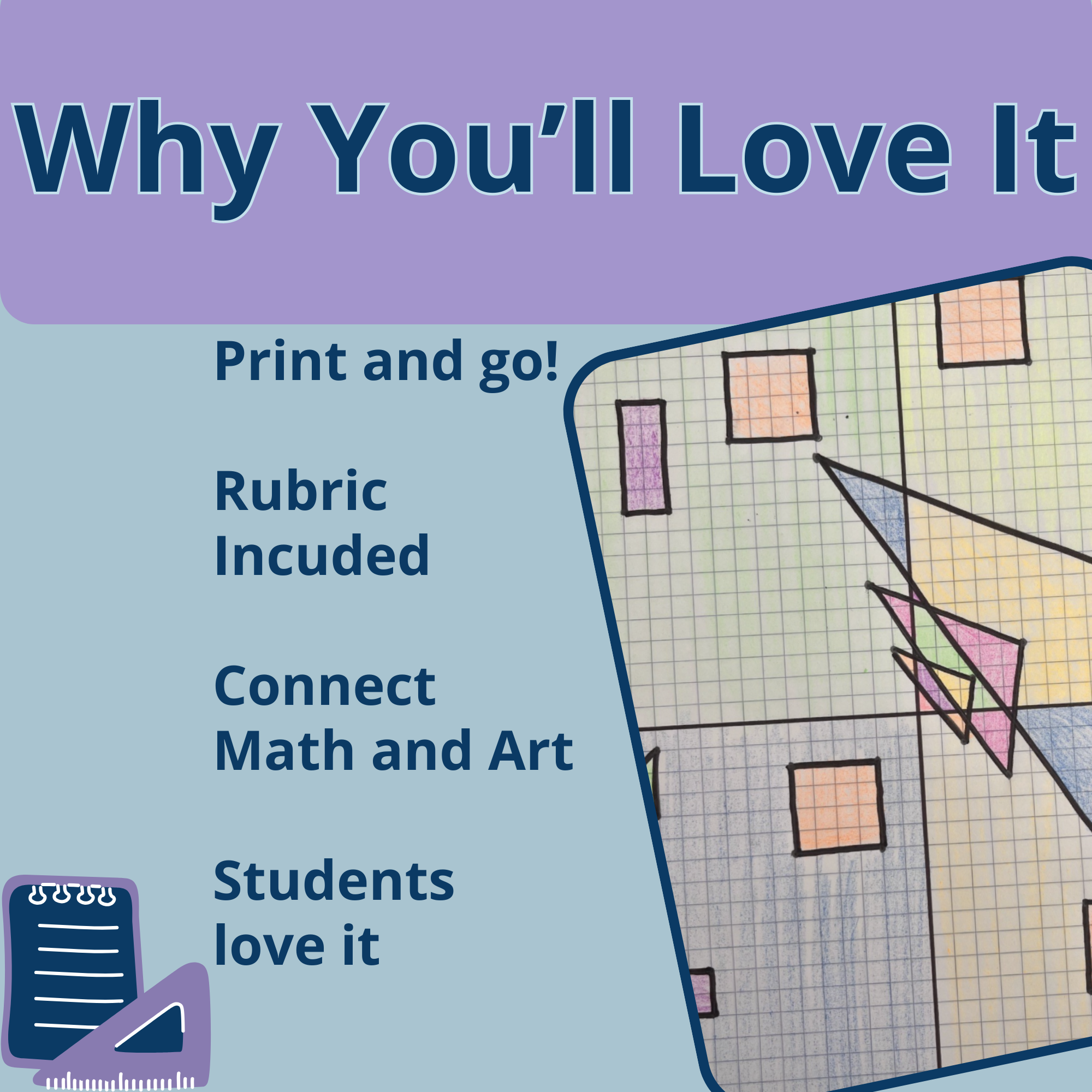
Make geometry meaningful and creative with this Transformations on the Coordinate Plane Project. Students design their own abstract art on a coordinate plane while applying translations, reflections, rotations, and dilations. By following transformation rules and graphing each image, students turn coordinate geometry into a vibrant, visual experience that deepens conceptual understanding.
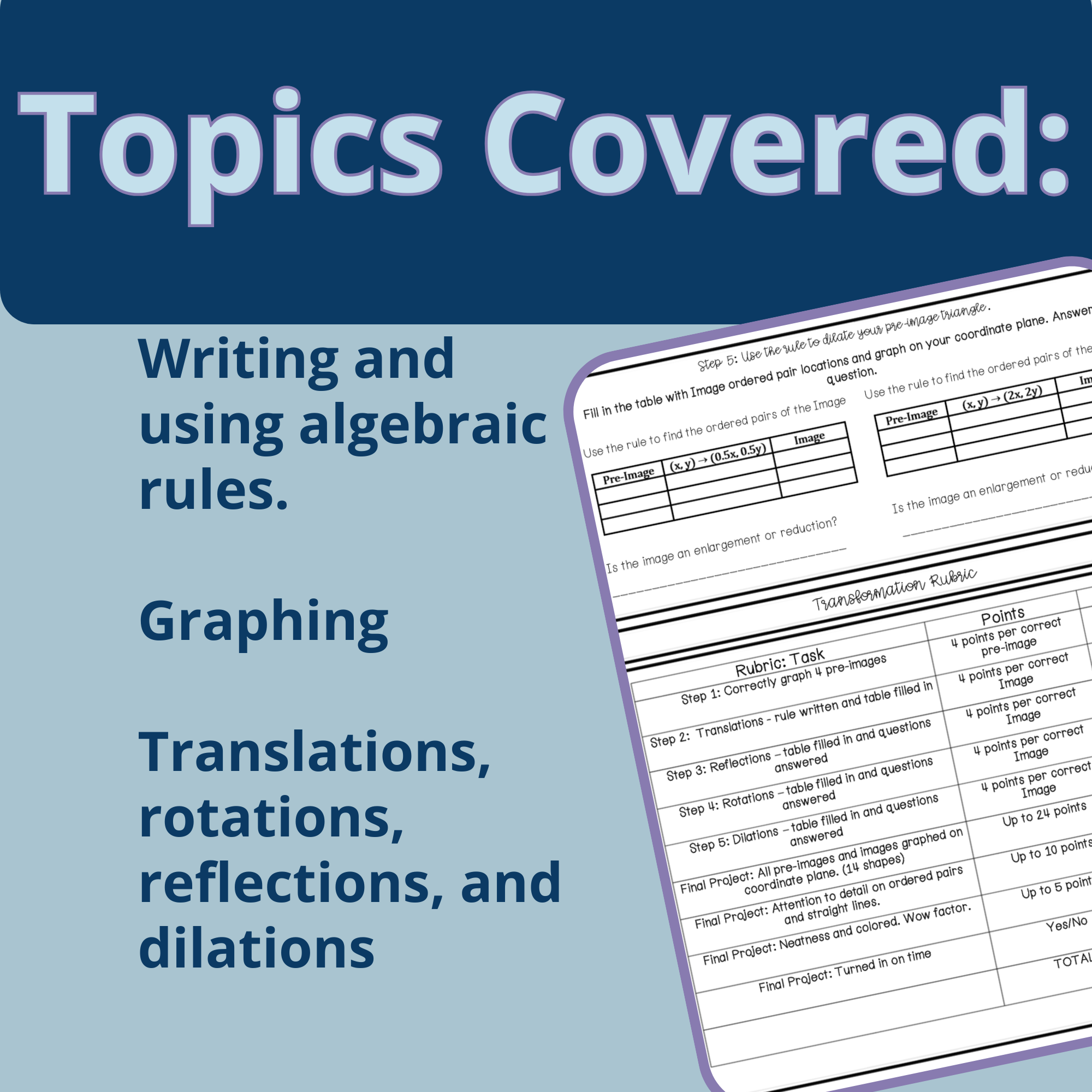
This Transformations Art Project blends mathematical reasoning with hands‑on creativity. Students begin by constructing four required pre‑image shapes directly from the project instructions. As they progress through each step, they apply transformation rules such as (x,y)→(−x,y) and (x,y)→(0.5x,0.5y) to generate images and record ordered pairs. Each transformation adds another layer to their abstract design, resulting in a colorful final product that showcases both precision and artistry.
Students stay highly engaged because they can see the math take shape. The project requires careful graphing, accurate rule application, and thoughtful reflection—reinforced by built‑in questions. These checkpoints strengthen reasoning and help students articulate how transformations affect figures on the coordinate plane.
This resource is fully print‑and‑go, making it ideal for busy classrooms, homeschool settings, or low‑prep instructional days.
✨ What’s Included
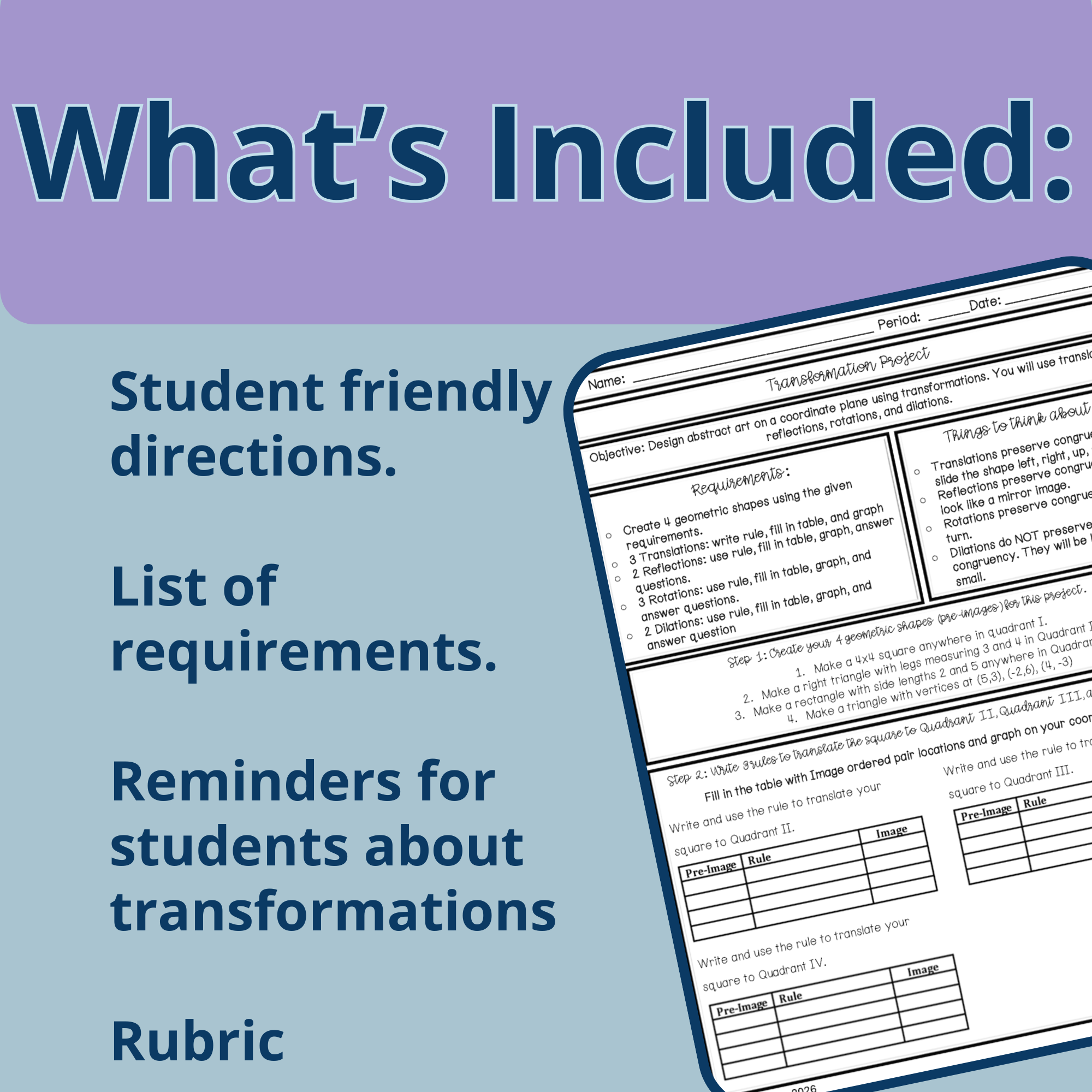
Step‑by‑step student directions for all five project components
Printable graphing pages and transformation tables
Structured tasks for translations, reflections, rotations, and dilations
Built‑in comprehension questions for deeper reasoning
A detailed grading rubric covering accuracy, neatness, and final presentation
Clear requirements for all pre‑images and transformed images
📚 Learning Objectives
Students will:
Plot and construct geometric figures on a coordinate plane
Apply translations, reflections, rotations, and dilations using formal rules
Fill in ordered‑pair tables to track pre‑images and images
Analyze how transformations affect position, orientation, and size
Use mathematical vocabulary to explain their reasoning
Synthesize their work into a polished abstract art design
💡 How to Use This Resource
This project works beautifully as a multi‑day activity, review lesson, or performance assessment.
Students begin by graphing four pre‑image shapes. Next, they complete each transformation task—writing rules, filling in tables, answering conceptual questions, and graphing the resulting images. Finally, they color and refine their abstract art piece, creating a display‑ready final product.
Perfect for:
End‑of‑unit assessments
Geometry or transformations review
Math‑and‑art cross‑curricular lessons
Enrichment or early‑finisher projects
Sub plans or low‑prep instructional days
🧠 The Pedagogy: Why It Works
Transformations become far more meaningful when students apply them rather than memorize rules. This project requires students to reason about how each transformation changes a figure’s location, orientation, and size. Because the artwork emerges gradually—shape by shape—students stay motivated and invested in accuracy.
The combination of graphing, rule writing, and reflection questions supports multiple learning modalities. Students build procedural fluency, strengthen spatial reasoning, and develop a conceptual understanding of transformations. The final abstract art piece provides a sense of ownership and pride while reinforcing essential geometry skills.
Make geometry meaningful and creative with this Transformations on the Coordinate Plane Project. Students design their own abstract art on a coordinate plane while applying translations, reflections, rotations, and dilations. By following transformation rules and graphing each image, students turn coordinate geometry into a vibrant, visual experience that deepens conceptual understanding.
This Transformations Art Project blends mathematical reasoning with hands‑on creativity. Students begin by constructing four required pre‑image shapes directly from the project instructions. As they progress through each step, they apply transformation rules such as (x,y)→(−x,y) and (x,y)→(0.5x,0.5y) to generate images and record ordered pairs. Each transformation adds another layer to their abstract design, resulting in a colorful final product that showcases both precision and artistry.
Students stay highly engaged because they can see the math take shape. The project requires careful graphing, accurate rule application, and thoughtful reflection—reinforced by built‑in questions. These checkpoints strengthen reasoning and help students articulate how transformations affect figures on the coordinate plane.
This resource is fully print‑and‑go, making it ideal for busy classrooms, homeschool settings, or low‑prep instructional days.
✨ What’s Included
Step‑by‑step student directions for all five project components
Printable graphing pages and transformation tables
Structured tasks for translations, reflections, rotations, and dilations
Built‑in comprehension questions for deeper reasoning
A detailed grading rubric covering accuracy, neatness, and final presentation
Clear requirements for all pre‑images and transformed images
📚 Learning Objectives
Students will:
Plot and construct geometric figures on a coordinate plane
Apply translations, reflections, rotations, and dilations using formal rules
Fill in ordered‑pair tables to track pre‑images and images
Analyze how transformations affect position, orientation, and size
Use mathematical vocabulary to explain their reasoning
Synthesize their work into a polished abstract art design
💡 How to Use This Resource
This project works beautifully as a multi‑day activity, review lesson, or performance assessment.
Students begin by graphing four pre‑image shapes. Next, they complete each transformation task—writing rules, filling in tables, answering conceptual questions, and graphing the resulting images. Finally, they color and refine their abstract art piece, creating a display‑ready final product.
Perfect for:
End‑of‑unit assessments
Geometry or transformations review
Math‑and‑art cross‑curricular lessons
Enrichment or early‑finisher projects
Sub plans or low‑prep instructional days
🧠 The Pedagogy: Why It Works
Transformations become far more meaningful when students apply them rather than memorize rules. This project requires students to reason about how each transformation changes a figure’s location, orientation, and size. Because the artwork emerges gradually—shape by shape—students stay motivated and invested in accuracy.
The combination of graphing, rule writing, and reflection questions supports multiple learning modalities. Students build procedural fluency, strengthen spatial reasoning, and develop a conceptual understanding of transformations. The final abstract art piece provides a sense of ownership and pride while reinforcing essential geometry skills.