Domain and Range Investigation and Practice
$2.00
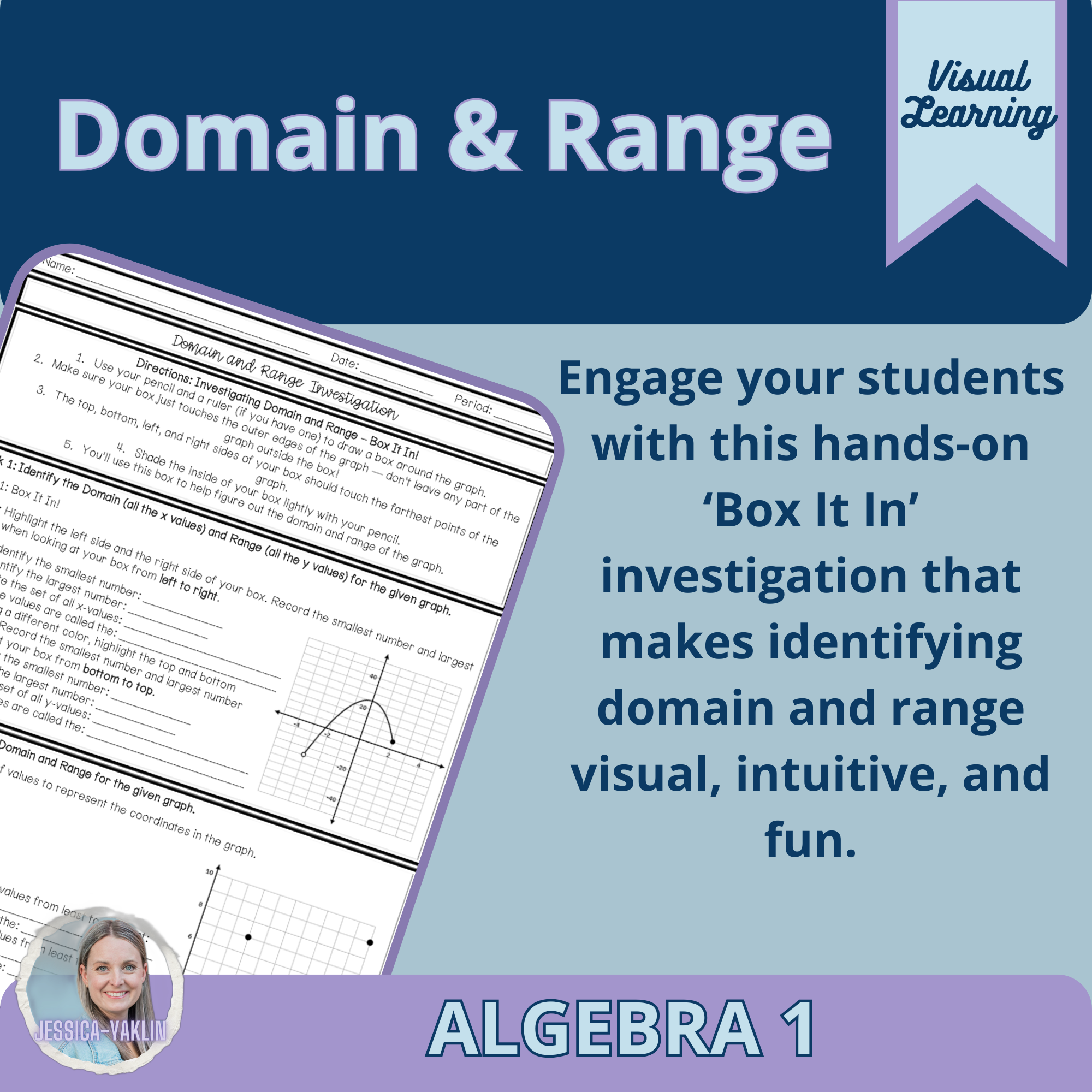
A visual “Box It In” reference page that teaches the domain and range strategy.
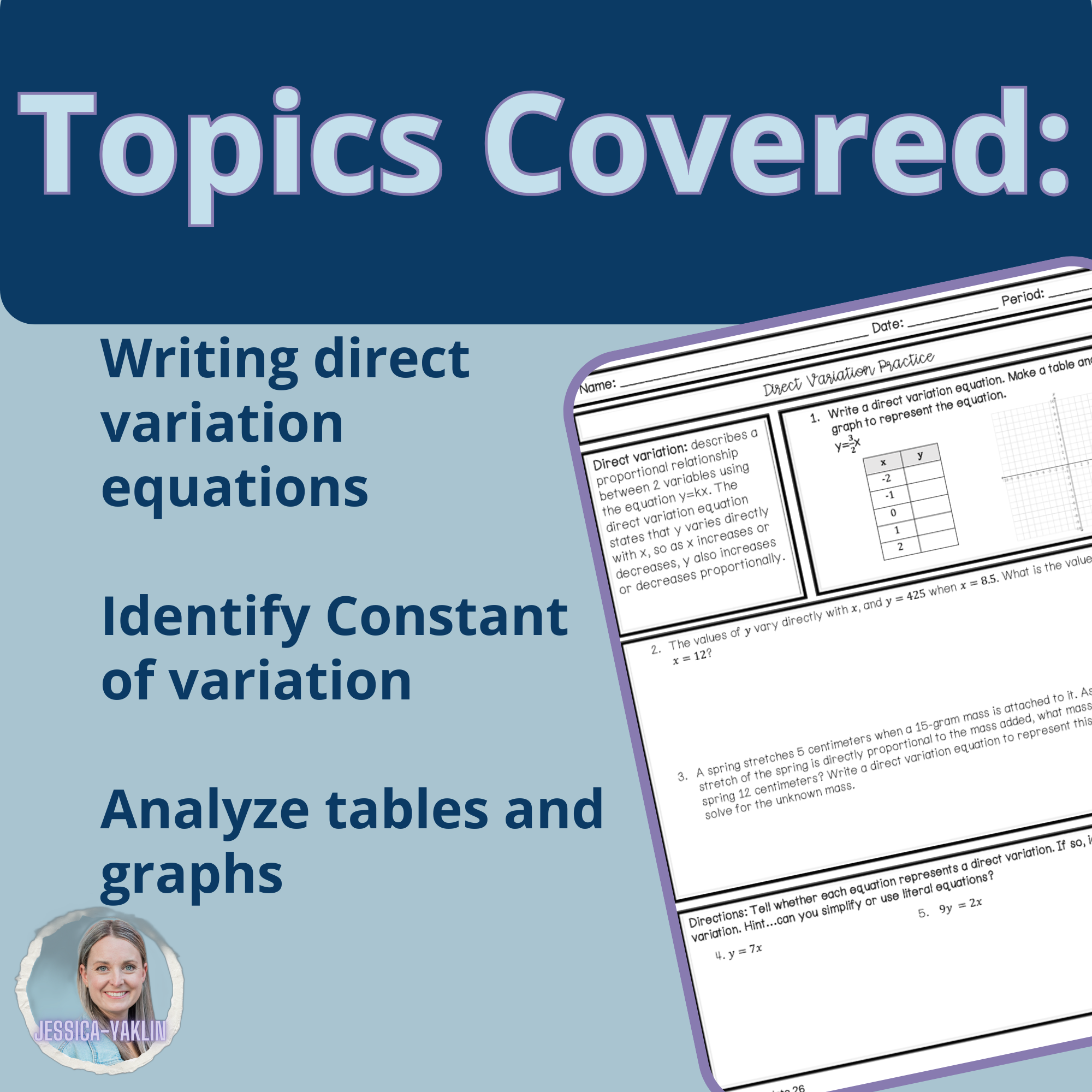
A student-friendly practice page for identifying domain and range from graphs.
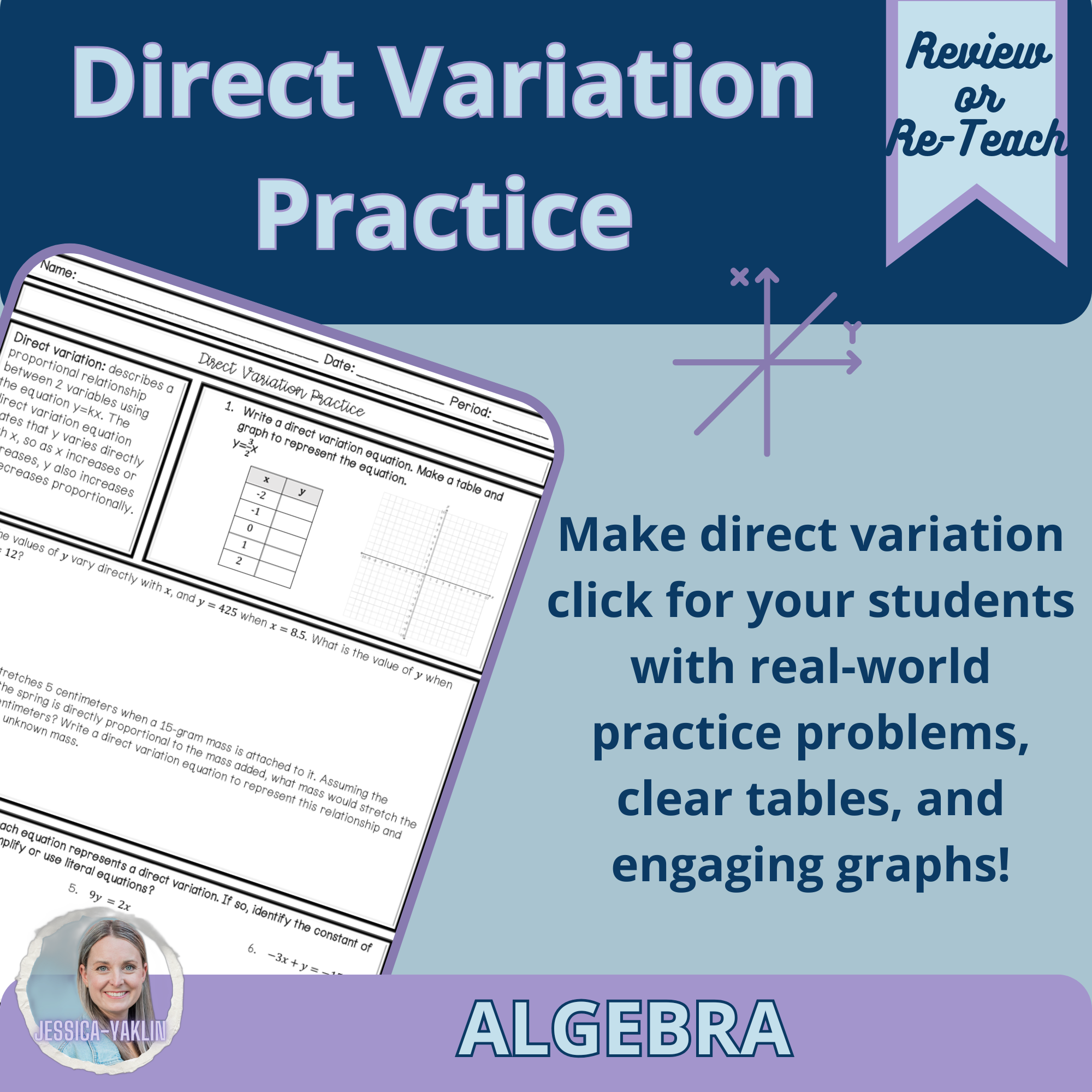
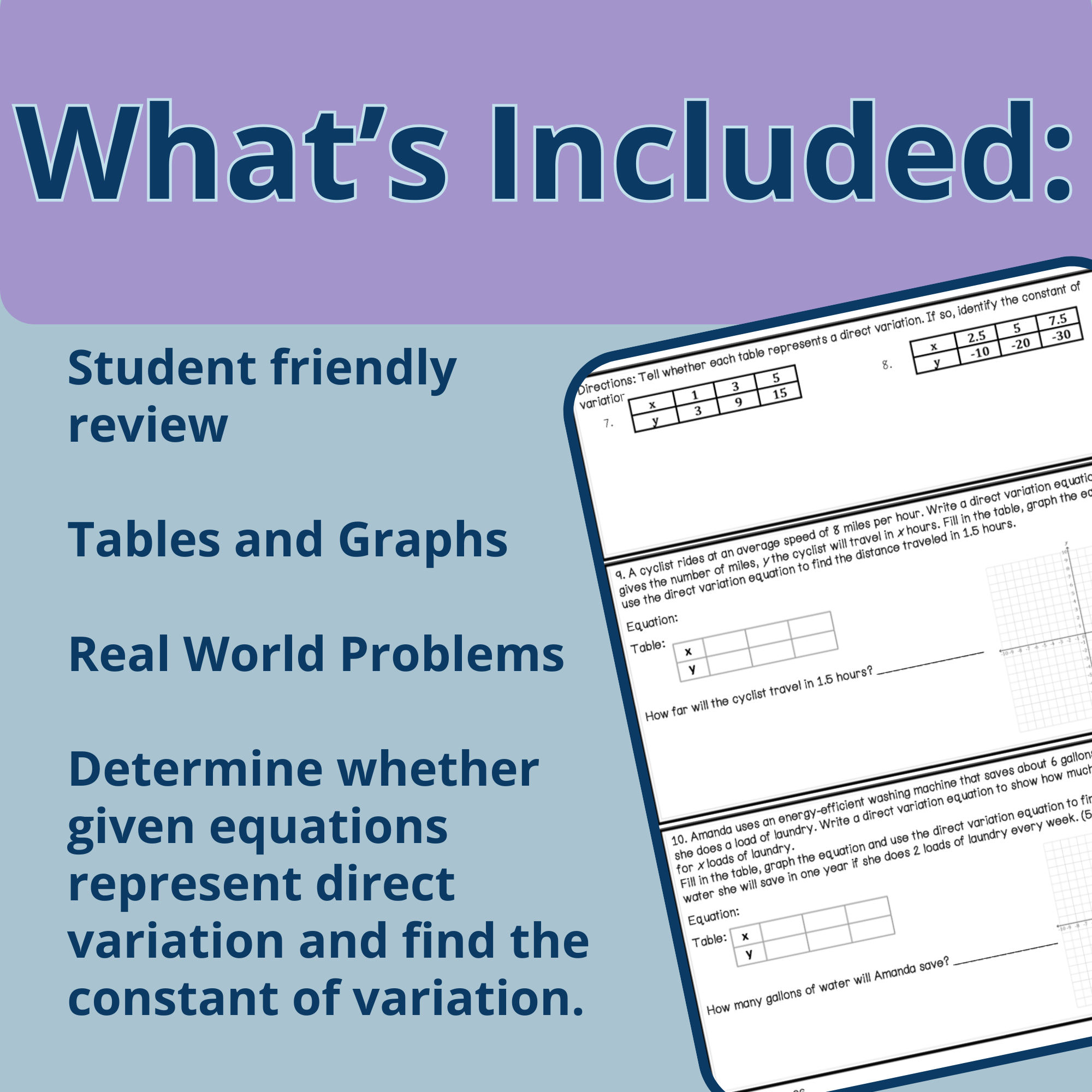
A table-based practice page for analyzing discrete and continuous data.
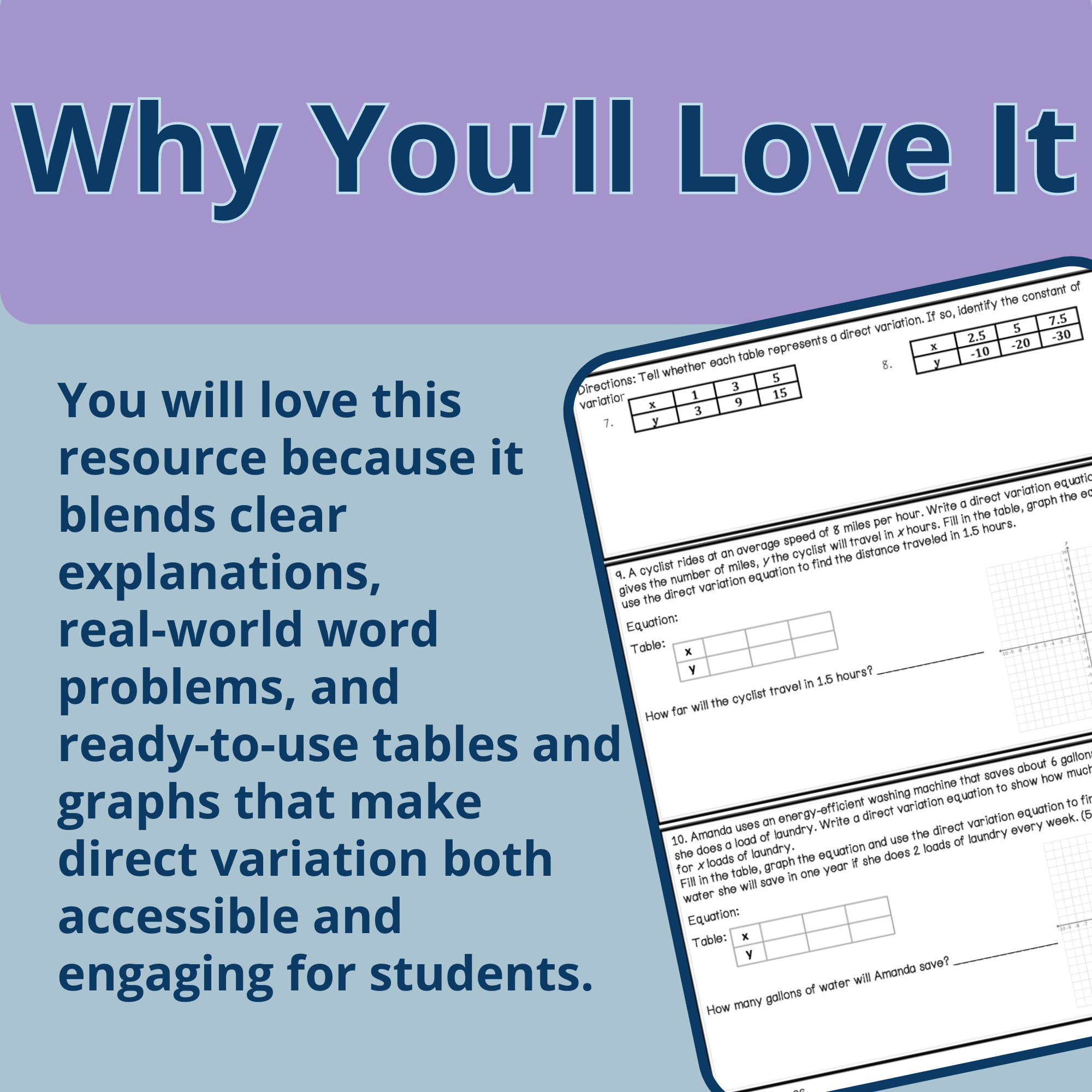
Function scenarios that require students to interpret domain and range in real-world contexts.
Clear, step-by-step directions that make this activity easy to implement.
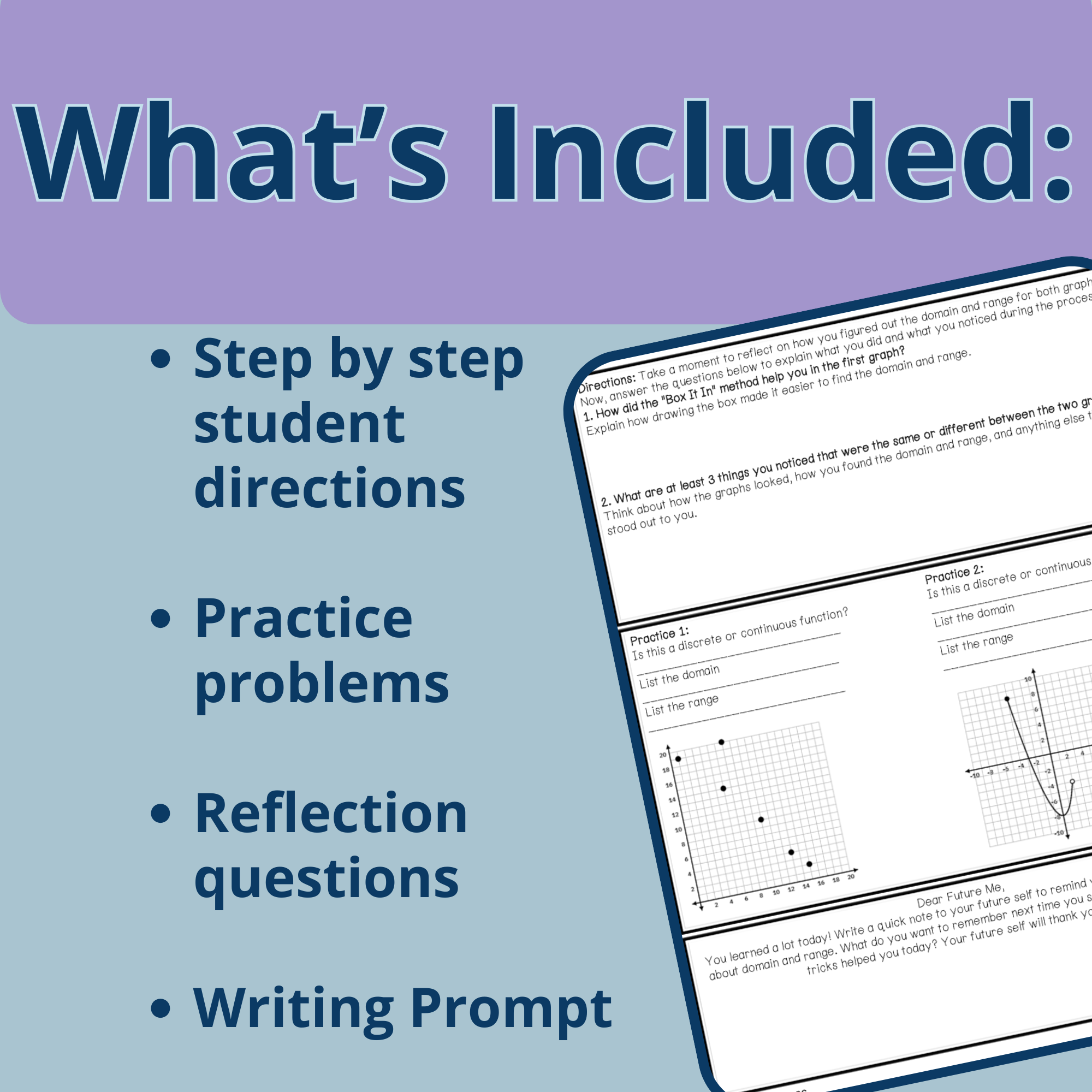
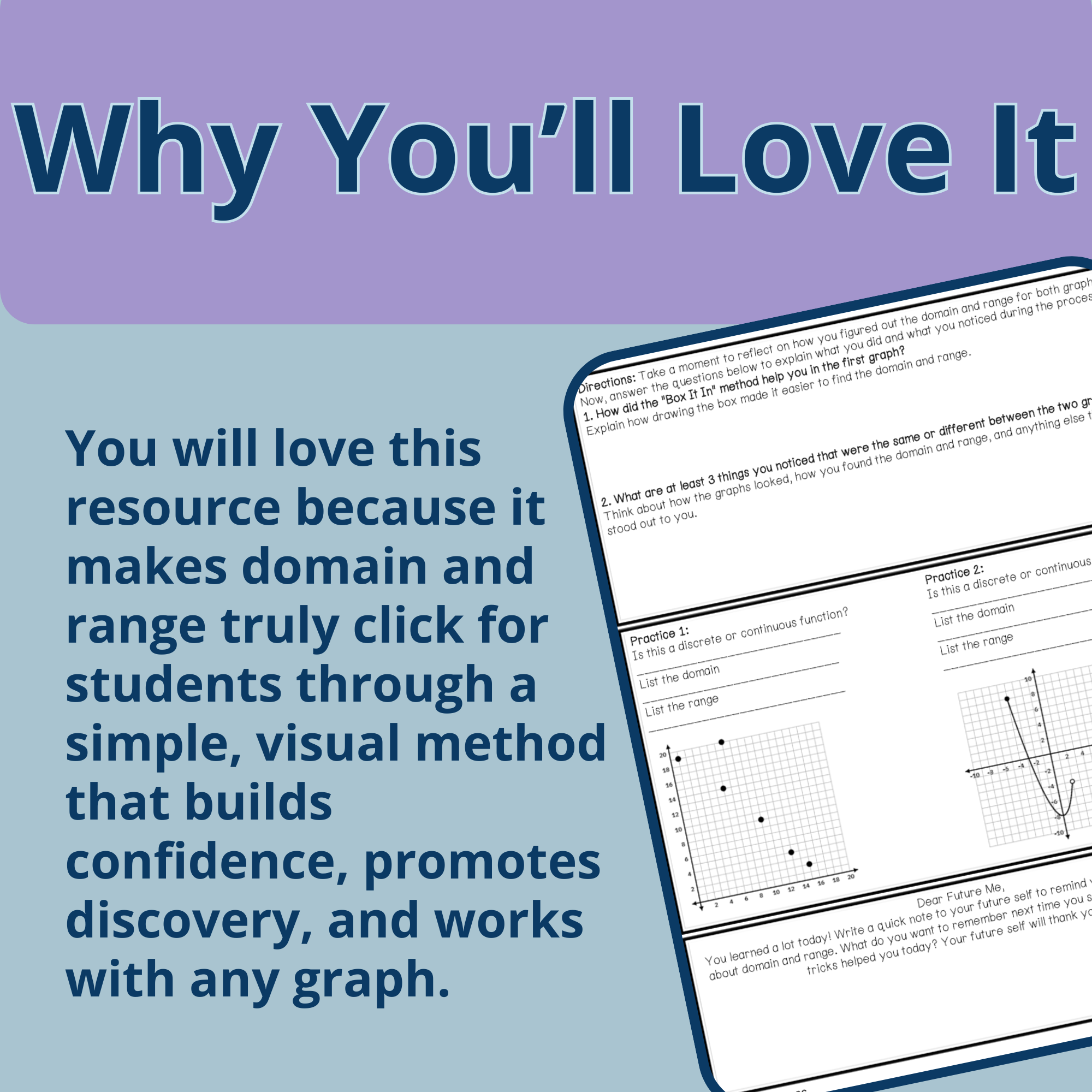
A reflection page that helps students deepen understanding and explain their reasoning.
Identify domain and range from graphs and tables.
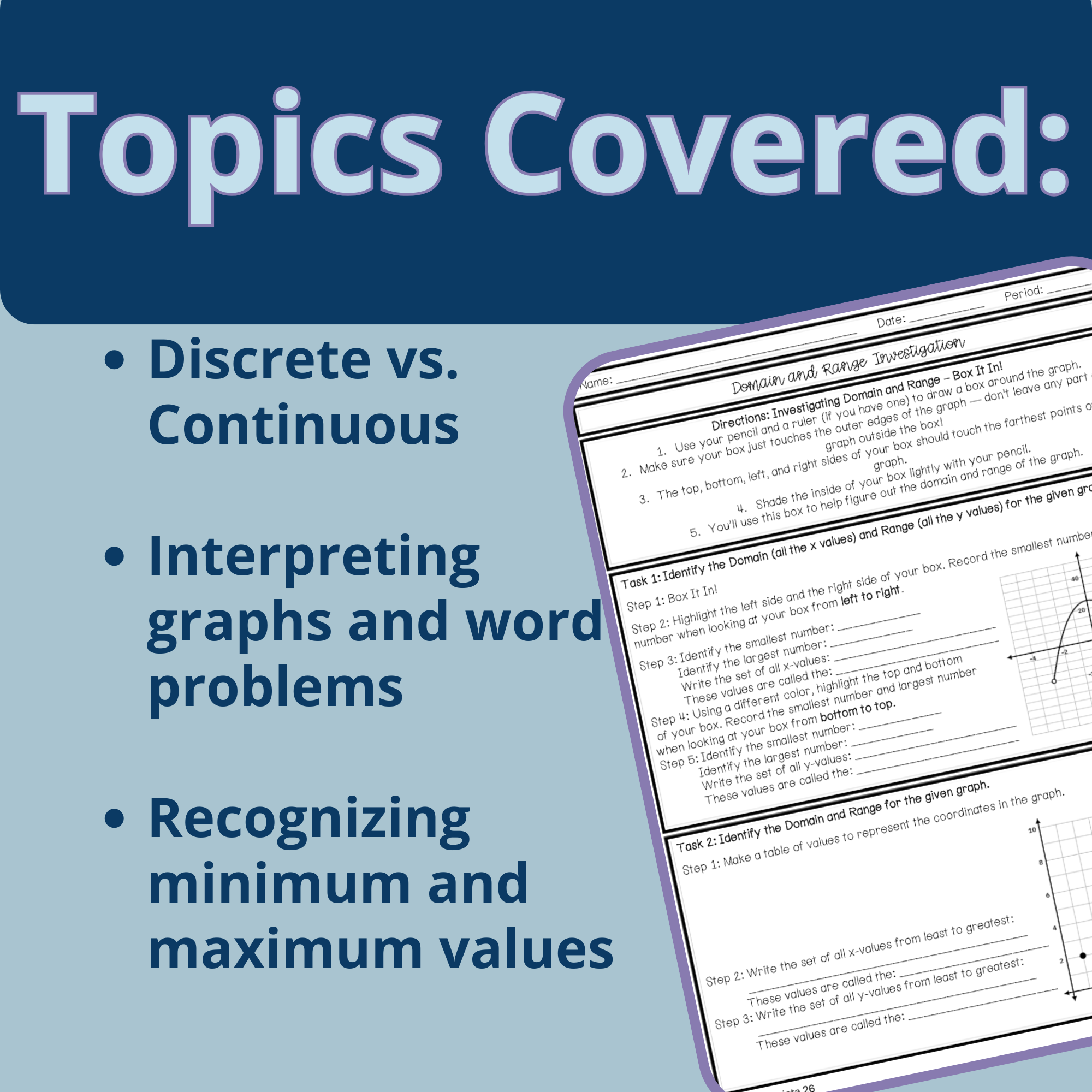
Understand the difference between discrete and continuous functions.
Write domain and range using inequalities.
Apply a visual strategy to analyze functions.
Build foundational graphing and function interpretation skills.
This activity is a hands-on, visual way to help students master domain and range.
Students will begin by learning the “Box It In” method and practicing it with simple graphs.
Next, they will apply the strategy to tables and real-world scenarios, determining whether each situation represents discrete or continuous data.
Students will write domain and range using inequalities and complete a reflection page to solidify understanding.
Perfect as a no-prep math activity, engaging review lesson, test prep resource, or sub plan.
Pre-Algebra, 8th Grade Math, and Algebra 1 classrooms.
Teachers looking for visual, student-friendly ways to teach domain and range.
Practicing and reviewing function concepts.
Math stations, partner activities, or independent practice.
Supporting visual, kinesthetic, and collaborative learners.
A no-prep printable activity for busy math teachers.
This resource blends algebraic thinking with visual learning. The “Box It In” method helps students see domain and range directly on the graph, making abstract concepts more concrete. Students move through natural scaffolding. From graphs to tables to real-world scenarios, building confidence as they apply the strategy in multiple contexts.
By connecting visual interpretation, inequality writing, and function analysis, this activity helps students develop a repeatable approach they can use throughout Pre-Algebra and Algebra 1. The reflection component encourages metacognition, helping students articulate their understanding and strengthen long-term retention.
A visual “Box It In” reference page that teaches the domain and range strategy.
A student-friendly practice page for identifying domain and range from graphs.
A table-based practice page for analyzing discrete and continuous data.
Function scenarios that require students to interpret domain and range in real-world contexts.
Clear, step-by-step directions that make this activity easy to implement.
A reflection page that helps students deepen understanding and explain their reasoning.
Identify domain and range from graphs and tables.
Understand the difference between discrete and continuous functions.
Write domain and range using inequalities.
Apply a visual strategy to analyze functions.
Build foundational graphing and function interpretation skills.
This activity is a hands-on, visual way to help students master domain and range.
Students will begin by learning the “Box It In” method and practicing it with simple graphs.
Next, they will apply the strategy to tables and real-world scenarios, determining whether each situation represents discrete or continuous data.
Students will write domain and range using inequalities and complete a reflection page to solidify understanding.
Perfect as a no-prep math activity, engaging review lesson, test prep resource, or sub plan.
Pre-Algebra, 8th Grade Math, and Algebra 1 classrooms.
Teachers looking for visual, student-friendly ways to teach domain and range.
Practicing and reviewing function concepts.
Math stations, partner activities, or independent practice.
Supporting visual, kinesthetic, and collaborative learners.
A no-prep printable activity for busy math teachers.
This resource blends algebraic thinking with visual learning. The “Box It In” method helps students see domain and range directly on the graph, making abstract concepts more concrete. Students move through natural scaffolding. From graphs to tables to real-world scenarios, building confidence as they apply the strategy in multiple contexts.
By connecting visual interpretation, inequality writing, and function analysis, this activity helps students develop a repeatable approach they can use throughout Pre-Algebra and Algebra 1. The reflection component encourages metacognition, helping students articulate their understanding and strengthen long-term retention.